Workforce Management in Arabic — Built for MENA, Not Translated
Why "Arabic support" in most WFM suites disappoints, and what a platform looks like when MSA, RTL, the Hijri calendar and Ramadan are part of the engine — not a language pack.
Every enterprise software vendor claims Arabic support. Walk into a MENA contact center running one of the big WFM suites and you'll see what that claim usually means: an English interface with a half-translated settings page, layouts that break the moment text flows right-to-left, and a calendar that has never heard of Ramadan. QuNeva was built the other way around.
What does real Arabic support look like?
It means the person doing the work never has to leave their language. In QuNeva, every screen — agent portal, schedules, requests, messaging, reports, admin — ships in Modern Standard Arabic alongside English, and the layout is natively right-to-left, not mirrored as an afterthought.
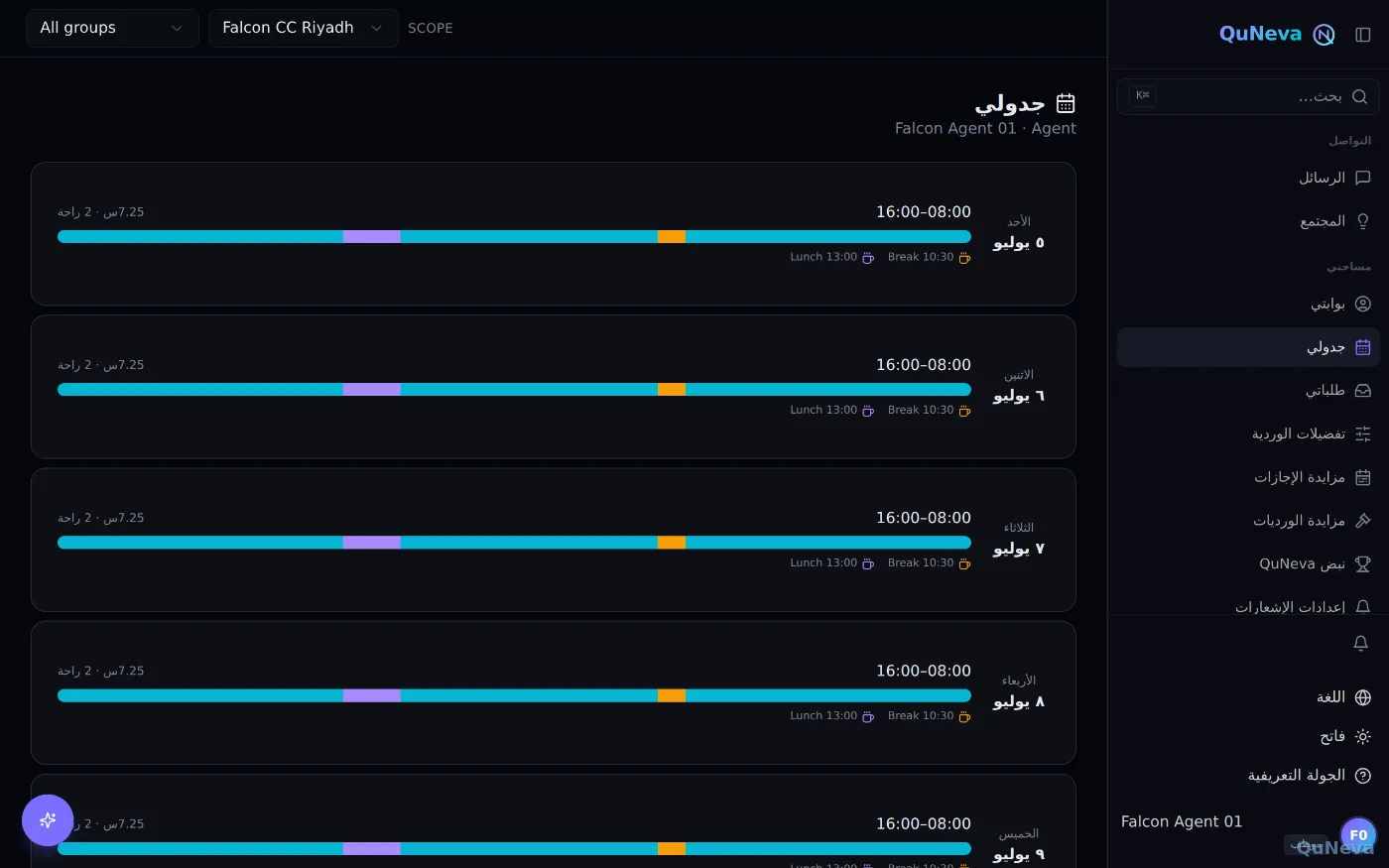
That includes the phone in the agent's pocket. The interface is verified down to 375 pixels wide, in both directions:
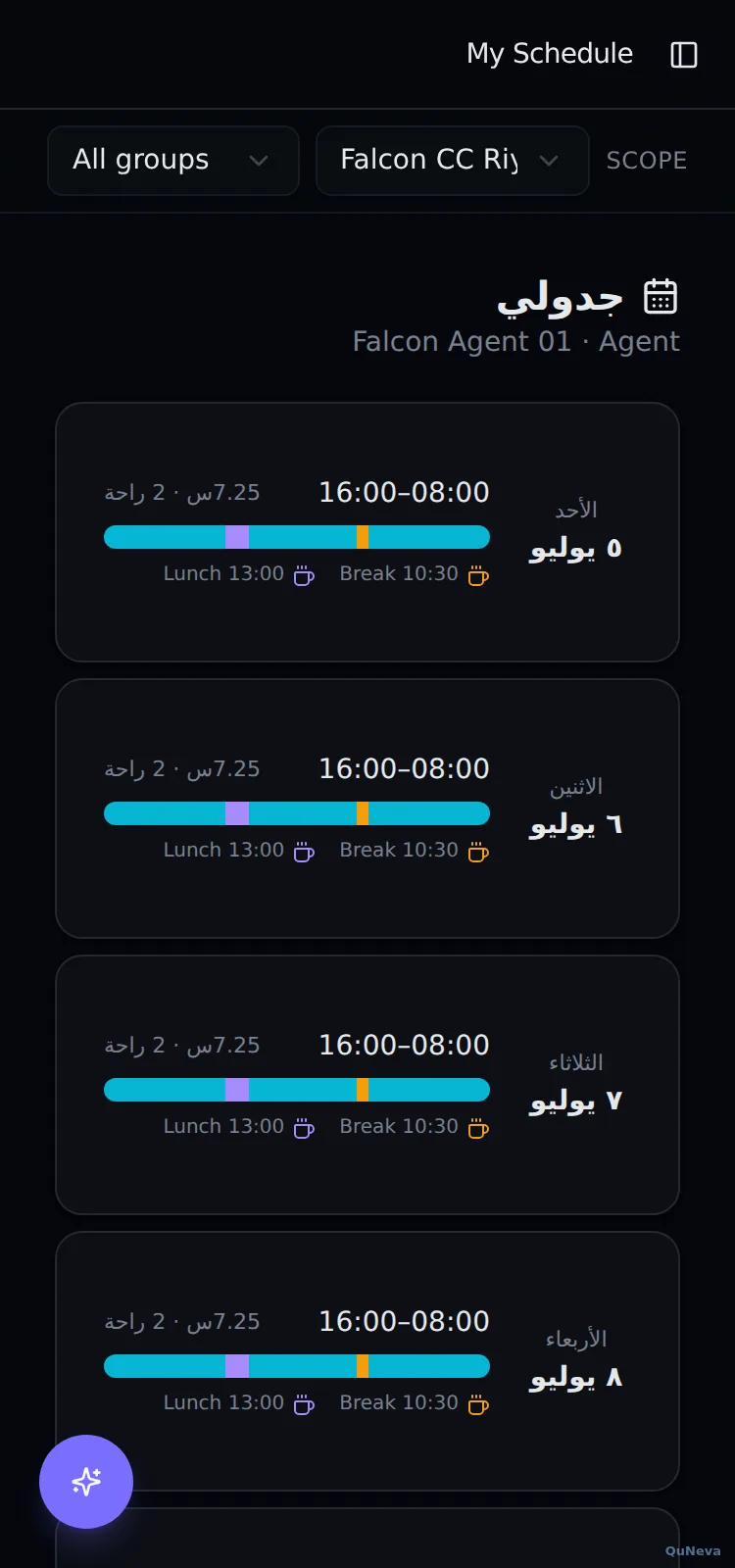
Why RTL is harder than flipping a switch
Right-to-left is not a CSS toggle. Tables, timelines, schedule grids, charts and chat bubbles all carry directional assumptions. A coverage heatmap that reads left-to-right by hour must not scramble when day labels are Arabic. QuNeva's screens were built with logical direction from the first line — which is why the Arabic product feels designed, not converted.
Even the AI assistant follows the rule: ask in Arabic, get fluent فصحى grounded in your actual schedule.
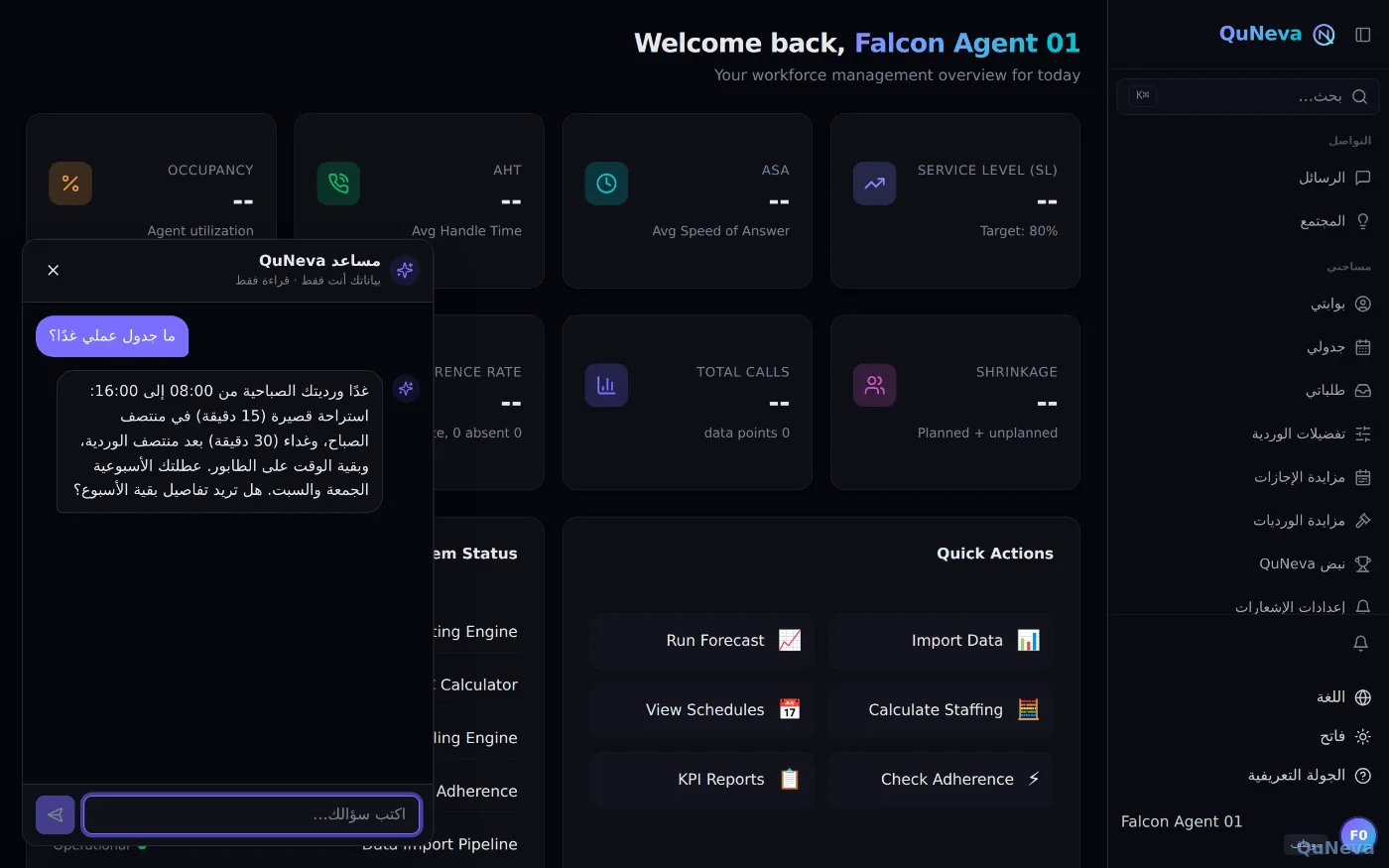
There's a deeper dive on the assistant in How an AI Assistant Changes Contact Center Scheduling.
The calendar problem: Hijri, prayer times and Ramadan
Contact-center demand in the region doesn't follow a Gregorian rhythm alone. Call volumes shift around prayer times, spike differently in Ramadan, and holidays land on Hijri dates. A forecast that ignores this is systematically wrong four weeks a year — the four weeks when staffing is hardest.
QuNeva treats these as engine inputs: the MENA calendar layer feeds Hijri dates, prayer windows and Ramadan shaping into forecasting, and coverage views carry Ramadan and iftar overlays. Weekends are configurable per organization — Friday–Saturday floors are the default case, not an exception.
Communication inside the platform, in Arabic
Schedules generate conversations: swap requests, approvals, team announcements. QuNeva keeps them in-platform — direct messages within the reporting line, team broadcasts, and an announcements ticker — all fully bilingual.
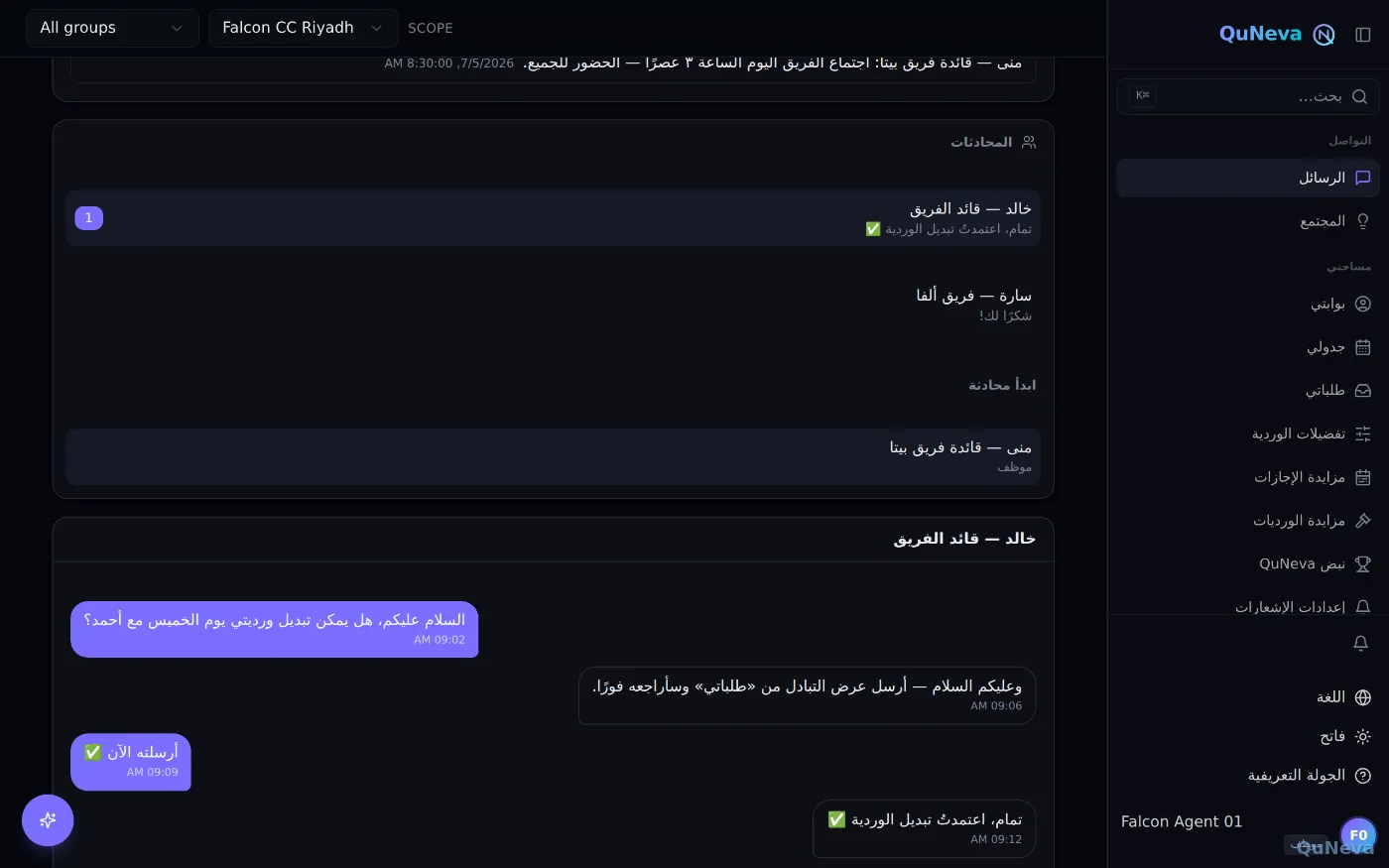
Why this matters commercially
Adoption. A WFM rollout fails quietly when agents can't read it. When the whole floor — from the newest agent to the operations director — works in their own language, self-service actually gets used, requests move through the system instead of WhatsApp, and the data the optimizer learns from is complete.
QuNeva is the platform we wished existed in the region's floors: AI-native, truly Arabic, with plans that fit every team size.
إدارة القوى العاملة بالعربية — مبنية للمنطقة لا مترجمة
كل مورّد برمجيات مؤسسية يدّعي دعم العربية. ادخل أي مركز اتصال في المنطقة يشغّل أحد أنظمة إدارة القوى العاملة الكبرى وسترى معنى الادعاء غالبًا: واجهة إنجليزية بصفحة إعدادات نصف مترجمة، وتخطيطات تنكسر لحظة جريان النص من اليمين إلى اليسار، وتقويم لم يسمع برمضان قط. QuNeva بُنيت بالاتجاه المعاكس.
كيف يبدو دعم العربية الحقيقي؟
يعني ألّا يضطر مَن يؤدي العمل إلى مغادرة لغته. في QuNeva، كل شاشة — بوابة الموظف، والجداول، والطلبات، والرسائل، والتقارير، والإدارة — متوفرة بالعربية الفصحى إلى جانب الإنجليزية، والتخطيط من اليمين إلى اليسار أصليٌّ في التصميم، لا انعكاسًا متأخرًا.
ويشمل ذلك الهاتف في جيب الموظف — الواجهة مُتحقَّق منها حتى عرض 375 بكسلًا في الاتجاهين:
لماذا يصعب RTL أكثر من قلب مفتاح؟
اليمين-إلى-اليسار ليس خيار CSS. فالجداول والخطوط الزمنية وشبكات الورديات والرسوم وفقاعات المحادثة كلها تحمل افتراضات اتجاهية. خريطة تغطية تُقرأ بالساعة من اليسار يجب ألّا تختلّ حين تكون تسميات الأيام عربية. شاشات QuNeva بُنيت بالاتجاه المنطقي من أول سطر — ولهذا يبدو المنتج العربي مُصمَّمًا لا مُحوَّلًا.
وحتى المساعد الذكي يتبع القاعدة: اسأل بالعربية تحصل على فصحى سليمة من جدولك الفعلي.
وللمساعد قصة أوسع في كيف يغيّر المساعد الذكي جدولة مراكز الاتصال؟.
مشكلة التقويم: الهجري وأوقات الصلاة ورمضان
طلب مراكز الاتصال في المنطقة لا يسير على إيقاع ميلادي فقط. تتحرك أحجام المكالمات حول أوقات الصلاة، وتقفز بنمط مختلف في رمضان، وتحلّ العطلات بتواريخ هجرية. تنبؤٌ يتجاهل ذلك يخطئ منهجيًا أربعة أسابيع كل عام — وهي تحديدًا أصعب أسابيع التوظيف.
تعامل QuNeva هذه كمُدخلات للمحرك: طبقة تقويم المنطقة تُغذّي التواريخ الهجرية ونوافذ الصلاة وتشكيل رمضان في التنبؤ، وتحمل شاشات التغطية طبقات رمضان والإفطار. والعطلة الأسبوعية قابلة للضبط لكل مؤسسة — صالات الجمعة والسبت هي الحالة الأصلية لا الاستثناء.
التواصل داخل المنصّة — بالعربية
الجداول تولّد حوارات: طلبات تبادل، واعتمادات، وإعلانات فريق. تُبقيها QuNeva داخل المنصّة — رسائل مباشرة ضمن التسلسل الإداري، وبثّ للفِرَق، وشريط إعلانات — وكلها ثنائية اللغة بالكامل.
ولماذا يهم هذا تجاريًا؟
التبنّي. يفشل تطبيق أي نظام قوى عاملة بصمت حين لا يستطيع الموظفون قراءته. أما حين تعمل الصالة كلها — من أحدث موظف إلى مدير العمليات — بلغتها، تُستخدم الخدمة الذاتية فعلًا، وتمرّ الطلبات عبر النظام لا عبر تطبيقات المحادثة، وتكتمل البيانات التي يتعلم منها المُحسِّن.
QuNeva هي المنصّة التي تمنّينا وجودها في صالات المنطقة: مبنية حول الذكاء الاصطناعي، وعربية حقًا، وبباقات تناسب كل حجم فريق.