How an AI Assistant Changes Contact Center Scheduling
What actually happens when every agent, team leader and planner can ask their WFM platform questions — and get grounded answers plus one-tap actions. A look at QuNeva Assist with real screenshots.
Ask any contact-center supervisor where their day goes and you'll hear the same list: "When is my next day off?", "Did my leave get approved?", "Can I swap Thursday?". None of these questions are hard — they're just constant. QuNeva's answer is to let the platform itself take them.
What can agents actually ask?
QuNeva Assist sits in the corner of every screen. An agent can ask, in their own words, about their schedule, their breaks, their leave balance and status, the nearest window where leave is likely to be approved, and their own performance numbers.
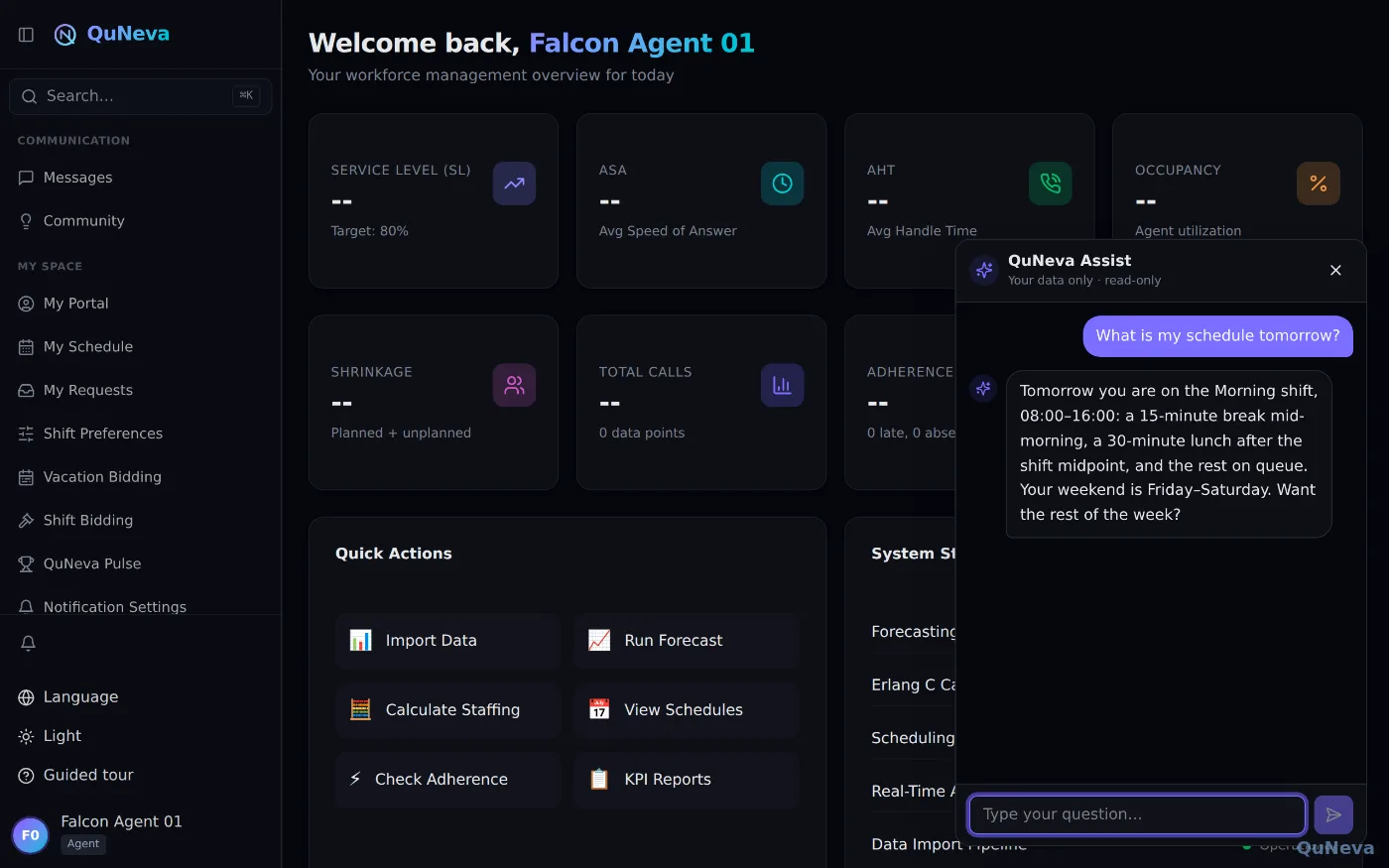
The reply is built from the same data the schedule screen uses — the published schedule, the real request queue — so it never contradicts what a supervisor sees.
Does it work in Arabic?
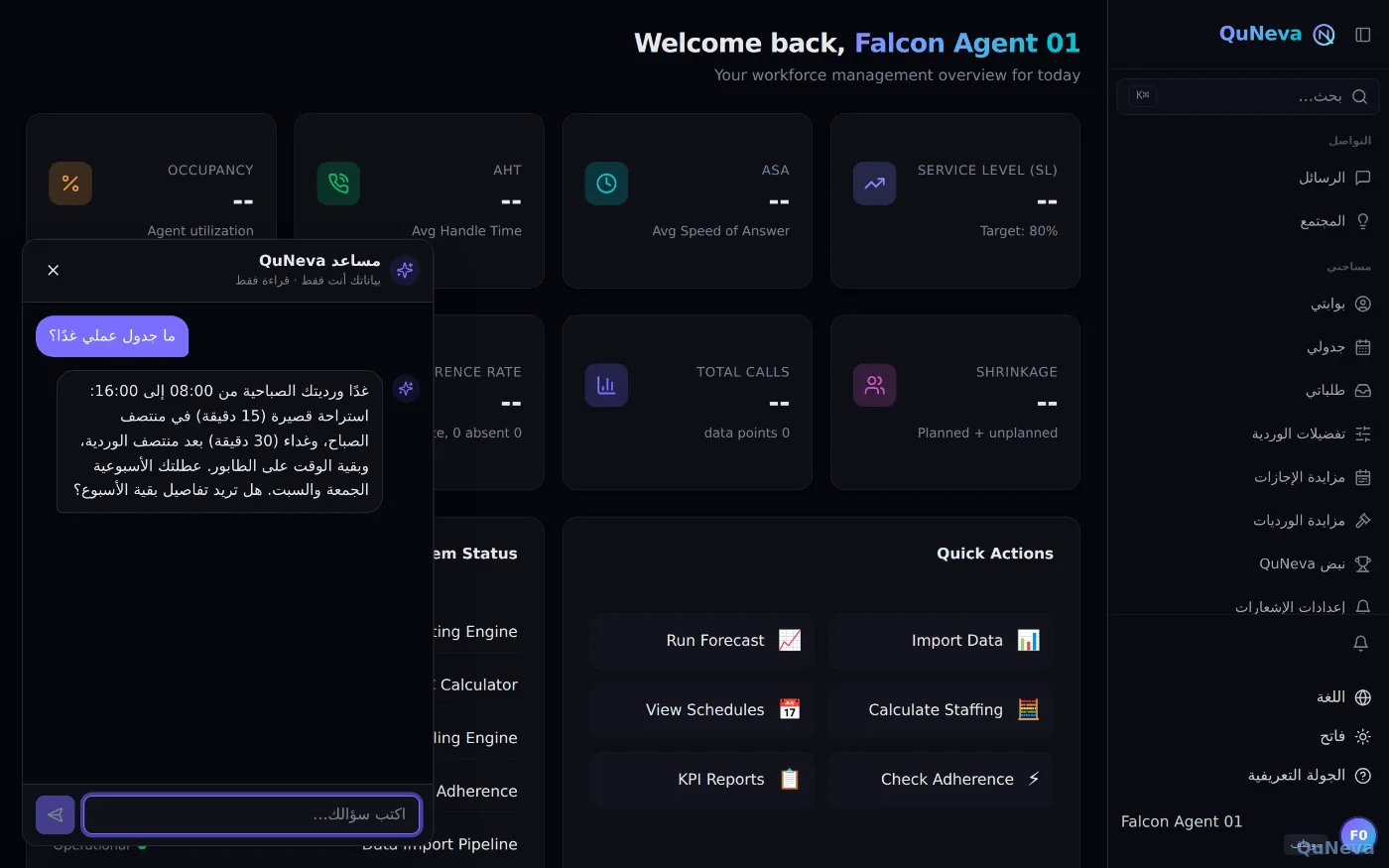
Yes — and not as an afterthought. The assistant answers in the language of the question: Arabic gets fluent Modern Standard Arabic, English gets English. For MENA floors where most agents work in Arabic, this is the difference between a feature that gets used and one that gets ignored.
How is this safe? Who sees what?
This is the question every WFM manager should ask about any AI feature. QuNeva's answer is structural, not a prompt promise:
- The assistant can only execute tools from a closed catalog — each tool has a role gate and validated parameters.
- Every tool runs as the asker. "My schedule" resolves from the session, so there is no way to request someone else's data.
- Team-level numbers exist only for team leaders and up; coverage summaries only for planners.
- If a tool returns nothing, the assistant says it doesn't have the data. It never invents numbers.
Beyond answers: one-tap actions
Reading data is half the story. With guarded actions enabled (a per-organization switch), the assistant can prepare a leave request, a break change, or a shift-trade posting. Nothing is submitted by the model — the user sees a confirmation card and taps to confirm. Each action type can be set to auto-approve or to route through the normal approval queue.
The request then lands in the same review inbox supervisors already use — visible in the agent's requests screen like any other request.
What changes for team leaders and planners
Leaders ask for team KPIs and get their own team, not a global dump. Planners ask about coverage and get the same numbers as the coverage heatmap. The assistant also navigates: "Where do I approve swaps?" points to the exact screen.
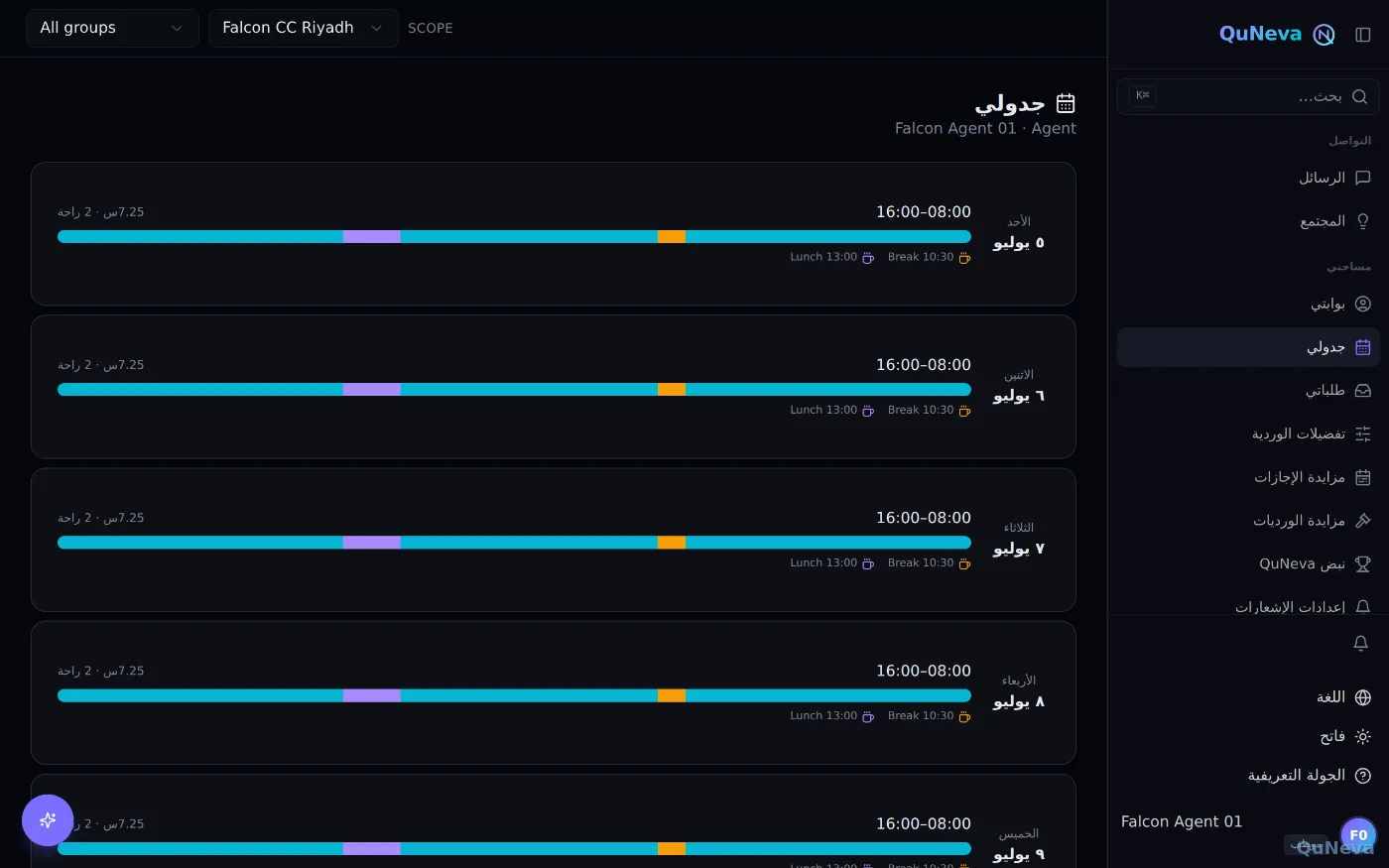
The practical effect: fewer interruptions travelling up the reporting line, and answers that arrive in seconds instead of shifts. Messaging still exists for the human conversations — see the team messaging screen — but the routine questions stop being messages at all.
The bottom line
An AI assistant changes contact-center scheduling not by generating schedules with magic, but by removing the thousand small questions that surround a schedule. QuNeva ships that today, in Arabic and English, grounded in your real data — see the plans or read what's genuinely free.
كيف يغيّر المساعد الذكي جدولة مراكز الاتصال؟
اسأل أي مشرف في مركز اتصال أين يذهب يومه وستسمع القائمة نفسها: «متى إجازتي القادمة؟»، «هل اعتُمد طلبي؟»، «هل أستطيع تبديل وردية الخميس؟». ليست أسئلة صعبة — لكنها لا تتوقف. إجابة QuNeva: دَع المنصّة نفسها تتولّاها.
عمّ يستطيع الموظف أن يسأل؟
يجلس مساعد QuNeva في ركن كل شاشة. يسأله الموظف بكلماته العادية عن جدوله، واستراحاته، ورصيد إجازاته وحالة طلباته، وأقرب نافذة يُرجَّح فيها قبول الإجازة، وأرقام أدائه هو.
تُبنى الإجابة من البيانات نفسها التي تعرضها شاشة الجدول — الجدول المنشور وطابور الطلبات الحقيقي — فلا تناقض أبدًا ما يراه المشرف.
وهل يعمل بالعربية؟
نعم — وليس كإضافة متأخرة. يجيب المساعد بلغة السؤال: العربية تحصل على فصحى سليمة، والإنجليزية على إنجليزية سليمة. في صالات المنطقة حيث يعمل معظم الموظفين بالعربية، هذا هو الفارق بين ميزة تُستخدم وميزة تُهمَل.
كيف يكون ذلك آمنًا؟ ومَن يرى ماذا؟
هذا هو السؤال الذي يجب أن يطرحه كل مدير قوى عاملة على أي ميزة ذكاء اصطناعي. إجابة QuNeva بنيوية، لا وعدًا في التعليمات:
- لا ينفّذ المساعد إلا أدوات من كتالوج مغلق — لكل أداة بوابة دور ومعاملات مُتحقَّق منها.
- كل أداة تعمل بهوية السائل. «جدولي» يُستخرَج من الجلسة نفسها، فلا سبيل لطلب بيانات شخص آخر.
- أرقام الفريق لا توجد إلا لقادة الفرق فمَن فوقهم؛ وملخصات التغطية للمخططين فقط.
- إن لم تُرجِع الأداة شيئًا، يقول المساعد إن البيانات غير متاحة. لا يخترع أرقامًا أبدًا.
أبعد من الإجابات: أفعال بلمسة واحدة
قراءة البيانات نصف القصة. مع تفعيل الأفعال الموجَّهة (مفتاح لكل مؤسسة)، يجهّز المساعد طلب إجازة، أو تغيير استراحة، أو عرض تبادل وردية. لا يُرسَل شيء بيد النموذج — يرى المستخدم بطاقة تأكيد ويلمسها بنفسه. ويمكن ضبط كل نوع على الاعتماد التلقائي أو المرور بطابور الاعتماد المعتاد.
يصل الطلب بعدها إلى صندوق المراجعة نفسه الذي يستخدمه المشرفون — مثل أي طلب آخر تمامًا، كما في شاشة طلبات الموظف.
وماذا يتغير لقادة الفرق والمخططين؟
يسأل القائد عن مؤشرات الفريق فيحصل على فريقه هو، لا تفريغًا شاملًا. ويسأل المخطِّط عن التغطية فيحصل على أرقام خريطة التغطية نفسها. والمساعد يدلّك أيضًا: «أين أعتمد التبديلات؟» يشير إلى الشاشة بعينها.
الأثر العملي: مقاطعات أقل تصعد التسلسل الإداري، وإجابات تصل في ثوانٍ بدلًا من ورديات. وتبقى الرسائل للحوارات الإنسانية — أما الأسئلة الروتينية فتكفّ عن أن تكون رسائل أصلًا.
الخلاصة
لا يغيّر المساعد الذكي جدولة مراكز الاتصال بتوليد جداول بالسحر، بل بإزالة آلاف الأسئلة الصغيرة المحيطة بالجدول. QuNeva تقدّم ذلك اليوم، بالعربية والإنجليزية، من بياناتك الحقيقية — اطّلع على الباقات أو اقرأ ما هو مجاني فعلًا.